Sudhan Subedi
It’s a match for us.
For them it is for life.
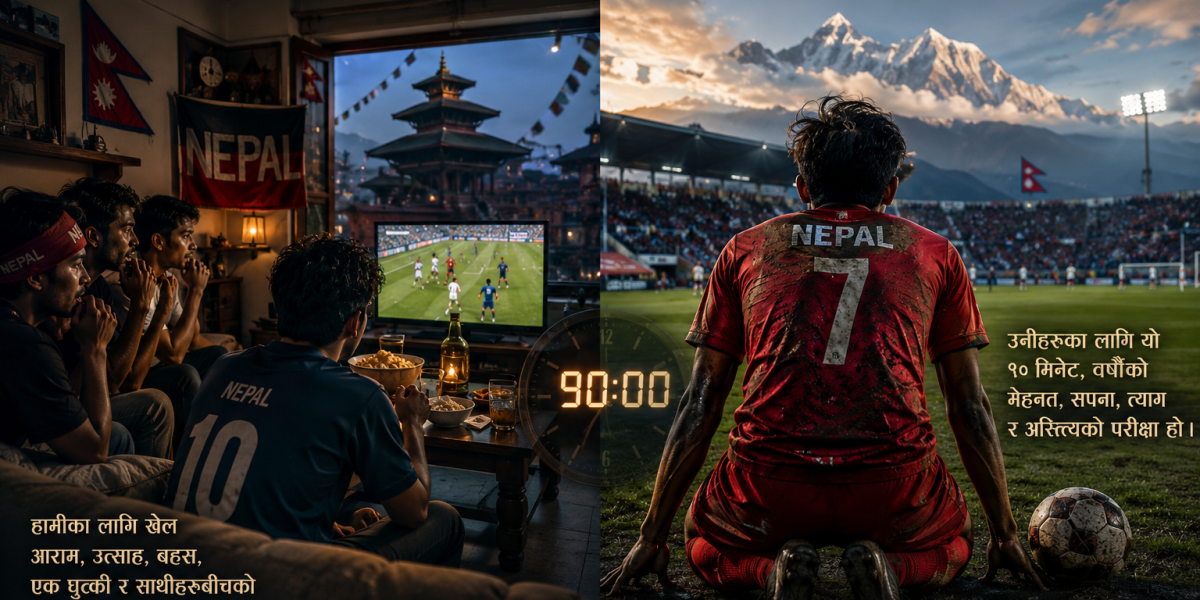
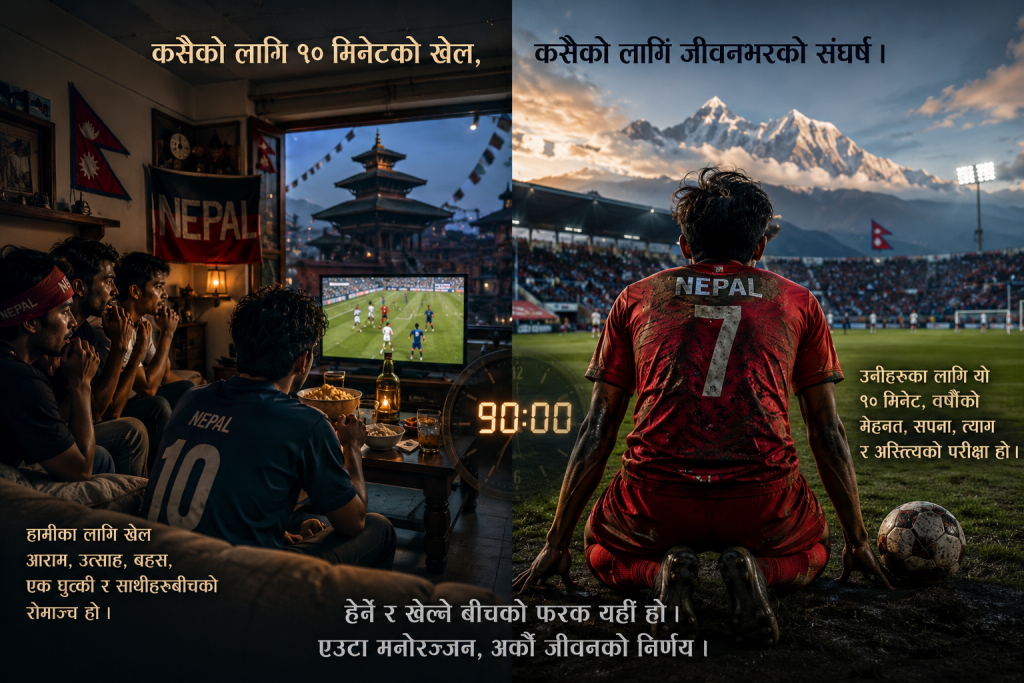
Some of us are lounging on a cosy sofa. Some meet with friends to watch a television. Someone sits alone in a quiet room. A friendly bet is laid by someone. Someone else adds a splash of liquor to the evening for a hint of flavour. Some relax, some tense, some cheer wildly, others curse a lost chance in silence. We flip channels, get another cup of tea, scroll social media, debate tactics, cheer, complain and move on.
We are just watchers.
Our feelings are genuine, but the stakes we are playing for are not our own.
On the other side of the screen are twenty-two players. And surrounding them are substitutes waiting for their opportunity, coaches feeling the invisible pressure, managers weighing every eventuality, analysts that have spent months analyzing patterns, medical staff that have nursed injured bodies back to fitness and families that have silently lived every sacrifice made on the way.
For them, ninety minutes are not simply ninety minutes.
They are years.
Years of rising before daybreak. Years of training. Missed family events, for years. Years of injuries and recoveries, criticism, hope, failure, and a new beginning. There are thousands of unseen training sessions in each sprint. Every pass has gone through many practice grounds. All goals have been practiced in dreams long before they hit the net.
The world recalls the score.
It hardly ever remembers the trip.
When a team loses, the microphones are waiting. “We learned a lot. “We will be back stronger.”
“We’re a long way from home yet.”
Maybe those words are correct.
They may be needed.”
Yet there is another reality behind these carefully constructed sentences that words rarely convey. When a player loses, it’s not just a game they lose. Sometimes he loses a dream he’s carried since childhood. Sometimes a whole generation waits another four years. Age sometimes tells him there may be no other chance.
To us it’s just another headline.
For them, it’s just another chapter of life.
Think about it.
A football match causes millions to stay awake all night around the world. Others rise before the sun. Some delay going to the office. Some families forgo the dinner. Some have meetings around the kickoff. The whistle makes the time zones yield.
And yet the world is moving ninety minutes of its schedule…
…those on the field have changed years of their lives.
Isn’t life so much alike?
Decidedly, years of studying by a three-hour exam.
A 30 minute interview decides a career.
Business changes in ten minutes of presentation.
One performance will change an artist.
Seconds decide an Olympic medal.
The moment of decision is always short.
Preparation is always lengthy.
We confuse the performance with the performer.
We judge the ninety minutes and forget the thousands of days that precede it.
Maybe that’s the biggest difference between watching and playing.
To amuse.
Variations in play.
Watching opinions are tolerated.
“It’s a responsibility to play.”
It is comfortable to watch it.
Performance costs.
One side is in love with the show.
The other bears its weight.
Maybe that’s why life is bipolar.
There is always a world that watches…
…and another that lives what is being seen.
The applause is for the audience.
The scars are on the performers.
Next time the referee blows the final whistle, maybe we should celebrate, criticise, analyse or even mourn the result – but also stop to take a moment.
‘For we had a space of ninety minutes…
someone else just paid the price of many years.
And that is a very different game to the one we saw.